What Is the European Union Digital Identity Wallet? A Complete Guide
The EU digital identity wallet will let every citizen authenticate, store, share, and sign documents digitally by the end of 2026. Here's what it means for individuals, businesses, and the public sector.

What is the European Union digital identity all about?
We are living in a time where everything is on the tip of our fingertips - the latest news and trends, communicating with friends, shopping online. But why in this age of technology do we still need a long paper trail of documents to prove who we are or what our credentials are? There are applications that can store some of the information that we need daily, but most of the time they are very specific and we need a different app for every single thing.

What exactly is a digital identity wallet?
A digital identity wallet is a secure application that stores digitally verified personal credentials - like IDs, passports, diplomas, etc. The most mainstream applications that have that function are the Apple and Google wallet, their ability to store official government IDs is currently mostly limited to the USA market. But what about Europe? Here these applications are used mainly for digital or physical payments. Wouldn’t it be incredible if we could store our identifications in a single application like these applications do for the users in the United States? Here comes the answer to that need - the European Union (EU) digital identity wallet.
With the EU digital identity wallet, users will not only be able to securely identify themselves, store and share digital documents, but they will also have the ability to safely access online services and create binding signatures.
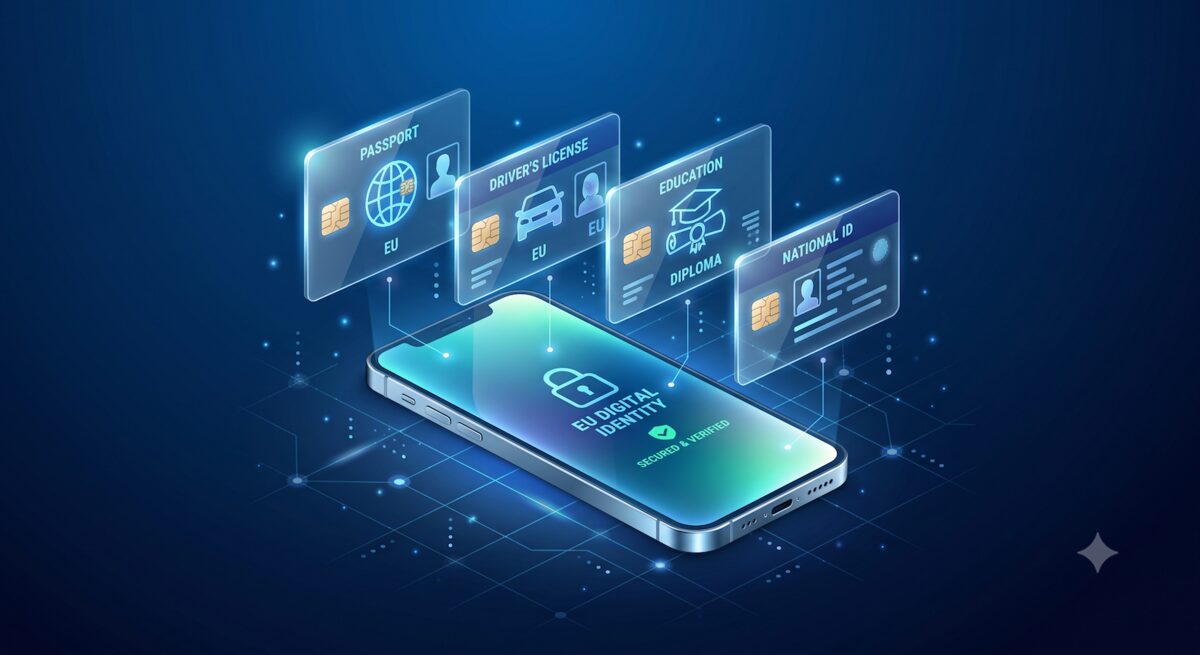
How did everything start?
- In 2014, the EU introduced the original eIDAS regulation (Regulation (EU) No 910/2014). This law aimed at making electronic IDs recognized across all European borders.
- In 2021, the EU Commission suggested a massive revision of this law, introducing the concept of the digital wallet. The main goal of this new law is to provide every EU citizen with full control over their own digital identity.
- On the 29th of February 2024, this updated law (Regulation EU 2024/1183) was adopted by the European Parliament.
- On the 20th of May 2024, the regulation entered into force.
- Member States are required to make a digital wallet available to citizens by the end of 2026.
- Looking further ahead, the EU’s broader “Digital Decade” ambition is for 80% of citizens to be actively using a digital identity solution by 2030.
Authenticate, store, share, sign
The four main functions of the EU digital identity wallet are to authenticate, store, share and sign. You will be able to do all of the above with a couple of clicks. There no longer will be a need to download an endless number of apps and constantly update the data. You will also have easier access to all your personal data and documents, instead of having to go through endless institutions.
You will be able to authenticate your identity to a broad spectrum of public and private services while your identity stays protected. Under the EU law major platforms like Google and different banks will be required to accept it. You will be able to prove your identity with only a couple of clicks instead of having to take a thousand pictures of your documents and waiting for someone to approve them manually.
The wallet is also designed to be able to store all your documents from your passport and diplomas to your driver’s licence. It will also be able to store everyday items like plane or concert tickets and connect them securely to your identity, which will drastically cut down on online fraud. You will be able to leave behind the paper trail of documents that you keep in endless folders throughout your home.
After you are sure that the document you need is saved in the digital wallet you will be able to share it. Instead of worrying about printing your tickets before travel or an interview with an employer you will be able to share them with a couple of clicks on your phone.
The last benefit of the wallet is the digital signature. There will no longer be a need to go and sign documents in person or use plug-ins with multiple steps to get a digital one.
The app will be able to store and share documents with sensitive personal information. There is strong cryptographic encryption in place that keeps all your data protected. Through a feature called “selective disclosure”, you will be able to share only the specific information that you want, while everything else will stay private and secured. Even though everything is protected, you will be able to share and work with your documents across the entire European Union.
The benefits of the EU digital identity in the everyday life
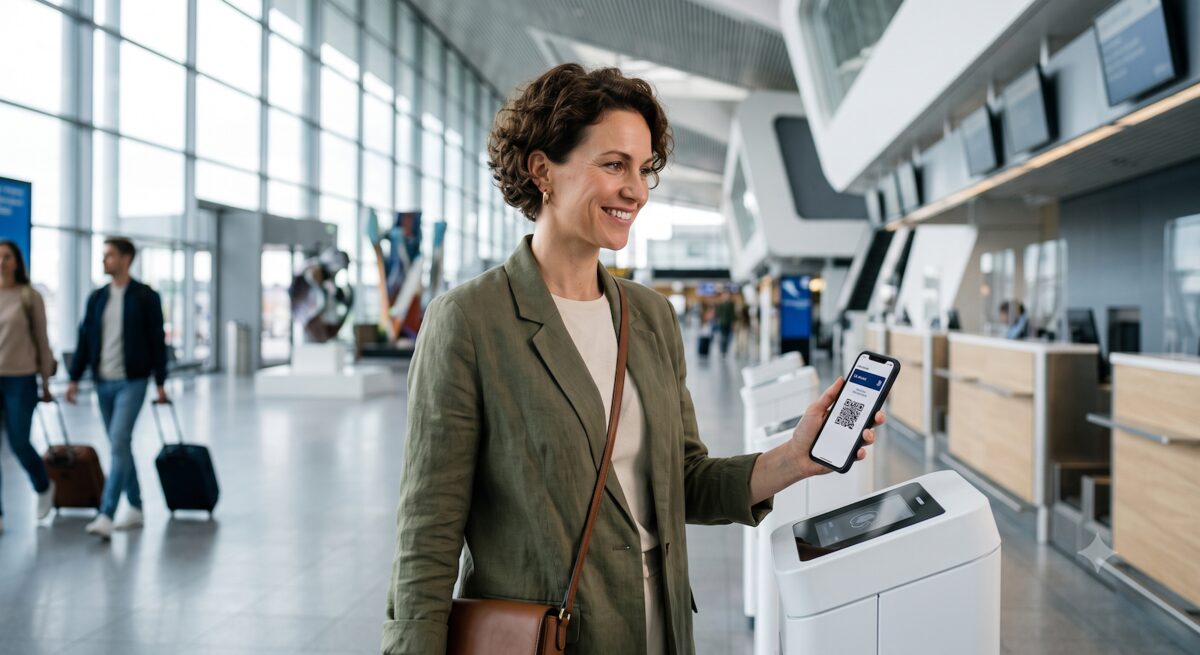
The EU digital identity wallet will have many benefits in everyday life, one of the main ones being that the need to carry physical documents will be eliminated.
With just one click, users will be able to securely share required documents with trusted parties. The only shared information will be the exact data that is required, all other identifying data won’t be revealed. This will limit the access to your personal information unlike when providing the physical copy of a required document. The only information that you will share and reveal will be the data you explicitly choose. For example you will be able to share only your age without sharing your birth date or any other irrelevant personal information. In some specific situations, you will even be able to prove a specific attribute without revealing your identity at all, such as proving that you live in a specific area of the city to vote on a local project, without revealing your name.
Let’s explore some of the most common use cases it will have:
- Mobile driver’s licenses: You will be able to download, store and share your driver’s license wherever you are. That will eliminate the need for carrying a physical copy every time you use your vehicle.
- Accessing government services: The access to national or international digital public services will be granted after securely identifying and authenticating yourself via the EU digital identity wallet. It will drastically reduce the time and administrative burden of accessing public and private services.
- Payments: Authenticating payments will never be easier. You will be able to identify yourself to all of your bank accounts and authorise payments securely.
- Opening a bank account: You will be able to open a new bank account without the need to go to a bank branch. Your identity will be easily confirmed securely by the EU digital identity wallet, and the whole process can happen online from the comfort of your home.
- Education certification: You can keep all of your education credentials like certificates and diplomas in one place. You won’t have to worry about losing or misplacing them. Also the process for applying for a job or another degree will be much easier.
- Health: Another thing you will be able to store in your wallet is documents related to your health. You will be able to easily collect electronic prescriptions (ePrescriptions) for yourself or a loved one from your local pharmacy or even from a pharmacy in another EU country.
- Accessing social security benefits: You will be able to prove that you are covered by your country’s social security when you travel, work or study abroad. You will also be able to store your health insurance card in there.
- SIM registration: You can use your wallet to easily verify your identity and buy a new prepaid SIM from a local provider. This will be a huge benefit if you travel and want to get a local SIM card without having to fill out any physical paperwork for the local providers.
- Travelling: You will be able to store and share key travel documents. You will no longer need to worry about forgetting to print or bring something, as everything you need for your travels will be securely kept right at your fingertips. You will be able to store not only important documents like your visa and passport, but also your tickets and other travel data. This will provide easier and sped up check-in to flights and hotels. However, a good thing to remember is that the digital wallet will act as a companion and will not replace your physical passport at international border control.
- Signing contracts: You can sign any contract digitally with your wallet. You will no longer need to go in person to sign documents or wait for your identity to be proven to get a digital signature every time you need to sign something.
- Organisational digital identities: With the wallet you can prove your professional affiliations. That means that you can complete any business-related transactions by proving exactly who you work for.
How to set up the wallet?
Setting up the wallet is an easy process with only a couple of steps.
- Step 1: Download the application.
You will need to download the application. It will be available across all major app stores and provided directly to you by your national government or authorised state providers.
- Step 2: Identify yourself.
You will have to identify yourself. After the installation and initial setup of your wallet, you will need to identify yourself by connecting to a digital ID issuer, which will be a specific entity appointed by your Member State. Depending on your country, you will easily do this by scanning your physical ID card with your phone or logging into your official government web portal.
- Step 3: Authentication.
The digital ID issuer will authenticate your identity using high-security official verifications and securely issue your digital ID to you. This is a secure backend check that will link your real identity to your digital identity. This step will be solely completed on the issuer’s side.
- Step 4: Access and Use.
After all of the above steps are completed and you have access to your digital ID, you will be able to identify and authenticate yourself via the wallet. You will also be able to access a wide range of services and request digital copies of important documents.
How will the public and private sector benefit from the EU digital identity wallet?

The EU digital identity wallet will improve security not only for users, but also for public administrations. The wallets are cybersecurity certified, which will ensure safety and privacy in every exchange.
With the adoption of the digital wallet there will be an opportunity to digitize more public services. As the goal of the wallet is for all EU citizens to have and use a digital ID, a lot of them will prefer to use digital services instead of handling appointments in person.
Another big benefit of the wallet is its ability to enhance the prevention of identity fraud. Now that users will have access to a secure and private means of digital identification, it will become significantly harder for them to become victims of scams related to their identity, which also will save public institutions millions in fraud investigation costs.
Private companies will also benefit. There will be a huge reduction in the cost of customer authentication. For high-stakes businesses like banks, the wallet will completely revolutionize the onboarding and the KYC (Know Your Customer) process - the identity checks required by the law. Instead of taking days to manually verify documents, companies will be able to safely register new users in seconds. These companies will be able to adapt their services to use the authentication that the EU digital wallets provide and because of this they will be able to provide digital access to a lot more of their services at a significantly reduced cost.
The EU digital identity wallet will also provide an opportunity for new business transactions due to it being cybersecurity compliant. Customer transactions can be carried out completely online because the wallet will offer tamper-proof, legally binding validity across all 27 EU member states. Because the wallet will be a neutral public sector authentication solution, private companies won’t have to worry about depending on private third party solutions. Furthermore, from 2027 big tech platforms and essential private sectors will be legally required to accept the EU wallet as an authentication method.